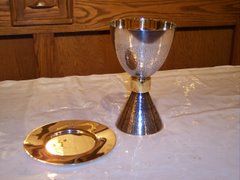
So I'm feeling a lit bit depressed, tired and self-indulgent. This is not good, since it is Wednesday and we have a church service and then choir practice. People expect their priest to have energy every time they see them. And it is not an unfair expectation. I get paid to care about people and share Good News with them in all occasions. It is quite reasonable for them to expect me to not only be glad to see them but not be self-indulgent and whinny.
But the sun is out, which hasn't happened in awhile, and I would really much rather be on at the driving range loosening my back up for the Golf Season. Trust me! My swing needs the work. But that is not the case and I need to stop whining, suck it up, remember that I'm working for God and just get 'er done!
Wednesday, April 02, 2008


Friday, March 28, 2008
I am Rabbit
It is a little frustrating how accurate this is...kinda like the first time I took the Myers-Briggs personality assessment and was angry the thing pegged me.

Your Score: Rabbit
You scored 20 Ego, 14 Anxiety, and 17 Agency!
IT was going to be one of Rabbit's busy days. As soon as he
woke up he felt important, as if everything depended upon him.
It was just the day for Organizing Something, or for Writing a
Notice Signed Rabbit, or for Seeing What Everybody Else Thought
About It. It was a perfect morning for hurrying round to Pooh,
and saying, "Very well, then, I'll tell Piglet," and then going
to Piglet, and saying, "Pooh thinks--but perhaps I'd better see
Owl first." It was a Captainish sort of day, when everybody
said, "Yes, Rabbit " and "No, Rabbit," and waited until he had
told them.
You scored as Rabbit!
ABOUT RABBIT: Rabbit is generally considered Clever by his many friends and relations. He is actually a much better reader and writer than Owl, but he doesn't consider it worth mentioning. Instead, Rabbit's real talent lies in Organizing Plans. He organizes rescue parties, makes schemes to reduce Tigger's bounciness, and goes on missions to find out what Christopher Robin does when he's not at the Hundred Acre Woods. Sometimes, however, his Plans do not always go as Planned.
WHAT THIS SAYS ABOUT YOU: You are smart, practical and you plan ahead. People sometimes think that you don't stress or worry, but this is not the case. You are the kind of person who worries in a practical way. You think a) What are my anxieties about and b)what can be done about them? No useless fretting for you. You don't see the point in sitting around and waiting for things to work out, when you could actually work them out today and save yourself a lot of time and worry. Your friends tend to rely on you, because they know that they can trust you help them work things out.
You sometimes tend to be impatient with people who are less practical in their ways. You don't have much patience for idiots who moan about things but never actually DO anything about them. You have high expectations of everyone, including yourself. When you don't succeed at something, or when something goes wrong despite your best efforts to prevent it, you can get quite hard on yourself. You need to cut yourself some slack and accept that everyone has their faults, even you, and THAT IS OKAY. Let yourself be faulty, every now and then, for the sake of your own sanity.
| Link: The Deep and Meaningful Winnie-The-Pooh Character Test written by wolfcaroling on OkCupid Free Online Dating, home of the The Dating Persona Test View My Profile(wolfcaroling) |
Sermon for International Associates get to Preach Sunday
When he had said this, he breathed on them and said to them, "Receive the Holy Spirit…”
I speak with you in the Name of God, the speaker, the word, and the breath. Amen!
Everybody take a breath!
Not bad, but you can do better. Work with me a little bit. Sit up straight with both feet flat on the floor. Close your eyes and breath in, imagining as you do so, "Breathing in, I recieve Christ." As you exhale imagine, "Breathing out I share Christ." One more time.
Thank you for participating.
I imagine by this point you might be wondering what has gotten into this preacher’s head? Why in the world is he trying to teach us how to breathe? I subjected you to this practice because breathing is a uniting force. More than anything other action on the planet, we all breathe. It doesn’t matter if you are black or white, Eurasian or Afro-Cuban, a school teacher or a lawyer, a barber, a senator, or a saint. We all breathe. I spent many a year in wind bands and symphonies and as any music director will tell you, an ensemble that breathes together plays together. When we breathe together we are united together.
Breathing is also a uniting force on a personal level. The Buddhist Monk, peace activist, and dabbler in Christian Spirituality Tich Naht Hahn writes of breathing,
I don’t know about you, but my mind and body are often doing two different things. Anything I can do to focus myself would indeed be enjoyable. Furthermore, I am elated to find out that something as inexpensive as breathing is helpful. Now, you might be thinking at this moment, this eastern philosophy, Buddhist mumbo jumbo is interesting and all preacher, but we’re Christians; so what do this have to do with Jesus?
Well, here it is. Breathing is a uniting force both corporately and individually because it re-members our creation. See, in our Gospel today Jesus breathes on the disciples. We should recall at this point that no matter what the disciples were they were Jewish. They grew up hearing and memorizing their ancient stories, and when Jesus breathed the Holy Spirit—the holy breath—on them they could not help but think of Genesis, of the creation. They could not help but think of that great story where God forms Ah-dam, the first human, out of the dirt of the earth and breathes on him, breathes into him the breath of life.
Jesus did not give that breath to the disciples thoughtlessly. Jesus did not give that breath unintentionally. Jesus breathed into them in order for them to be the image of God to this creation. See, they had fallen from that image. The powers that be, the adversary, Satan, the devil, society, the world, fear, shame—whatever word you want to use to describe the fallen forces of this creation—had formed the disciples away from God’s intention. These disciples who had walked, talked, eaten, and rejoiced with Christ for years deserted him on the night he was arrested. These disciples had been sent out to heal and preach the God News of the Kingdom of God in the Name of Jesus, but on that night Peter would not even admit he knew this man. The disciples of Jesus are dismembered from what they were created to be, separated from the image of God in Christ Jesus.
The breath of God, the Holy Spirit given through Christ re-members them, unites them with who they were created to be. These fearful, cowardly, sinful disciples are changed by the breath of God. They go from cowering in a locked room to traveling the known word sharing the gospel. They go from refusing to admit they even know this man to preaching Jesus Christ Crucified and risen from the dead in the temple. They go from unable to deal with their own grief and disillusionment, to healing the sick and raising the dead. They go from sinners to saints and their transformation happens in and through a breath.
God does not give us that breathe thoughtlessly. God does not give us God’s breath unintentionally. God breathes into us in order for us to be the image of God to this creation. We have fallen from that image. Our lives are dis-membered and are in need of re-membering through the breath of God. Out city is dis-membered, separated by perceptions based on race, money, and geography. It is fallen just as we are fallen. But today we stand ready for transformation. Today we stand ready to breathe in Christ who will change us. Today we stand ready to breathe out Christ who will change the world.
I speak with you in the Name of God, the speaker, the word, and the breath. Amen!
Everybody take a breath!
Not bad, but you can do better. Work with me a little bit. Sit up straight with both feet flat on the floor. Close your eyes and breath in, imagining as you do so, "Breathing in, I recieve Christ." As you exhale imagine, "Breathing out I share Christ." One more time.
Thank you for participating.
I imagine by this point you might be wondering what has gotten into this preacher’s head? Why in the world is he trying to teach us how to breathe? I subjected you to this practice because breathing is a uniting force. More than anything other action on the planet, we all breathe. It doesn’t matter if you are black or white, Eurasian or Afro-Cuban, a school teacher or a lawyer, a barber, a senator, or a saint. We all breathe. I spent many a year in wind bands and symphonies and as any music director will tell you, an ensemble that breathes together plays together. When we breathe together we are united together.
Breathing is also a uniting force on a personal level. The Buddhist Monk, peace activist, and dabbler in Christian Spirituality Tich Naht Hahn writes of breathing,
“Breathing in and out is very important, and it is enjoyable. Our breathing is the link between our body and our mind. Sometimes our mind is thinking of one thing and our body is doing another, and mind and body are not unified. By concentrating on our breathing, 'In' and 'Out,' we bring body and mind back together, and become whole again.”
I don’t know about you, but my mind and body are often doing two different things. Anything I can do to focus myself would indeed be enjoyable. Furthermore, I am elated to find out that something as inexpensive as breathing is helpful. Now, you might be thinking at this moment, this eastern philosophy, Buddhist mumbo jumbo is interesting and all preacher, but we’re Christians; so what do this have to do with Jesus?
Well, here it is. Breathing is a uniting force both corporately and individually because it re-members our creation. See, in our Gospel today Jesus breathes on the disciples. We should recall at this point that no matter what the disciples were they were Jewish. They grew up hearing and memorizing their ancient stories, and when Jesus breathed the Holy Spirit—the holy breath—on them they could not help but think of Genesis, of the creation. They could not help but think of that great story where God forms Ah-dam, the first human, out of the dirt of the earth and breathes on him, breathes into him the breath of life.
Jesus did not give that breath to the disciples thoughtlessly. Jesus did not give that breath unintentionally. Jesus breathed into them in order for them to be the image of God to this creation. See, they had fallen from that image. The powers that be, the adversary, Satan, the devil, society, the world, fear, shame—whatever word you want to use to describe the fallen forces of this creation—had formed the disciples away from God’s intention. These disciples who had walked, talked, eaten, and rejoiced with Christ for years deserted him on the night he was arrested. These disciples had been sent out to heal and preach the God News of the Kingdom of God in the Name of Jesus, but on that night Peter would not even admit he knew this man. The disciples of Jesus are dismembered from what they were created to be, separated from the image of God in Christ Jesus.
The breath of God, the Holy Spirit given through Christ re-members them, unites them with who they were created to be. These fearful, cowardly, sinful disciples are changed by the breath of God. They go from cowering in a locked room to traveling the known word sharing the gospel. They go from refusing to admit they even know this man to preaching Jesus Christ Crucified and risen from the dead in the temple. They go from unable to deal with their own grief and disillusionment, to healing the sick and raising the dead. They go from sinners to saints and their transformation happens in and through a breath.
God does not give us that breathe thoughtlessly. God does not give us God’s breath unintentionally. God breathes into us in order for us to be the image of God to this creation. We have fallen from that image. Our lives are dis-membered and are in need of re-membering through the breath of God. Out city is dis-membered, separated by perceptions based on race, money, and geography. It is fallen just as we are fallen. But today we stand ready for transformation. Today we stand ready to breathe in Christ who will change us. Today we stand ready to breathe out Christ who will change the world.
Breathing in,we receive Christ.Breathing out,we share Christ.Amen!
Thursday, March 27, 2008
The Light of Christ
So when one starts a journey towards the priesthood things change. Of course that is an obvious sentence, because once anyone starts any journey things change. With becoming a priest one central that changes is how I experience the the Eucharist. Before the collar, on the congregational side of the altar rail, the Eucharist was about being fed...
...about showing up at God's table with all that is good and all that is bad about me,
...about that whole broken self being accepted by God, and
...about God saying, "I'll take you and here's me in exchange. The bread might taste a bit like card board and the wine might be a bit vinegary, but it's God and it is sufficient for you." Then I would say thanks God and go.
As a priest you can lose a lot of that in the Eucharist. It is really easy to become caught, not in the mystery of God's grace, rather in thinking about what comes next in the liturgy and not forgetting to take communion to that faithful person who can't walk sitting in the back. It can become about minutia not about the grand cosmic salvation scheme.
It is rumored that this phenomenon passes with time, and it becomes possible to preside and worship during the Eucharist. I have been waiting for that day, and at the Easter vigil this past Saturday night, I think I caught a whiff of it. There was something right about passing out the bread to folks at the rail, something Christ like in the people kneeling at the rail, something hopeful and holy. My friends the Caffeinated Priest and I Are A Writer have recently reminded me that, while in Seminary that taught us that the priest at the altar is a vision of Christ before the people, it is much healthier for me to have a vision of Christ in people I serve.
I love the people of my congregation dearly. Admittedly, with some it is an easier task then with others, but there is Christ in all of them. For all their joys and talent, gifts and skills, warts and foibles I love them. I pray for them. I hope for them. And, I hope and pray God keeps me humble enough to serve them well. Somehow, I think having enough faith in God keeping me humble will not be a hard.
God's Peace,
Jason+
...about showing up at God's table with all that is good and all that is bad about me,
...about that whole broken self being accepted by God, and
...about God saying, "I'll take you and here's me in exchange. The bread might taste a bit like card board and the wine might be a bit vinegary, but it's God and it is sufficient for you." Then I would say thanks God and go.
As a priest you can lose a lot of that in the Eucharist. It is really easy to become caught, not in the mystery of God's grace, rather in thinking about what comes next in the liturgy and not forgetting to take communion to that faithful person who can't walk sitting in the back. It can become about minutia not about the grand cosmic salvation scheme.
It is rumored that this phenomenon passes with time, and it becomes possible to preside and worship during the Eucharist. I have been waiting for that day, and at the Easter vigil this past Saturday night, I think I caught a whiff of it. There was something right about passing out the bread to folks at the rail, something Christ like in the people kneeling at the rail, something hopeful and holy. My friends the Caffeinated Priest and I Are A Writer have recently reminded me that, while in Seminary that taught us that the priest at the altar is a vision of Christ before the people, it is much healthier for me to have a vision of Christ in people I serve.
I love the people of my congregation dearly. Admittedly, with some it is an easier task then with others, but there is Christ in all of them. For all their joys and talent, gifts and skills, warts and foibles I love them. I pray for them. I hope for them. And, I hope and pray God keeps me humble enough to serve them well. Somehow, I think having enough faith in God keeping me humble will not be a hard.
God's Peace,
Jason+
Tuesday, March 25, 2008
Easter Vigil Sermon 2008
This sermon was inspired by a Penitential Rite written by Fr. Ernesto Medina in the publication Awake my Soul available online here.
“We know that Christ, being raised from the dead, will never die again; death no longer has dominion over him… So you also must consider yourselves dead to sin and alive to God in Christ Jesus.”
I speak with you in the name of the creating God, the resurrected Christ, and the ever-present Holy Spirit. Amen!
Good evening! Thank you for coming out this evening to the most sacred worship service of the Christian Year. A lot of work went in to making this the most sacred service we hold here at All Saints, and I encourage you to give your thanks and appreciation to all who worked on this service as I do. We have arrived at Easter. Our journey with Christ has been long over these forty days, but finally we are here. And on this sacred night it is both good and right that we have heard yet again the sacred tale of salvation history; God’s story beginning with creation and coming in the fullness of time to the life, death, and resurrection of Jesus Christ.
It is on this salvation history that I would like to reflect with you for a moment or two. Recently I read a liturgy written by Dean Ernesto Medina, who serves down at the Cathedral, on salvation history and it got me to thinking about how our story is woven with God’s story through rocks and water.
See, in the beginning, God created. During the creation God made rocks while thinking “my children will walk on these rocks.”
You hold that rock in your heart.
God’s children did walk on the rocks. Eventually, sadly, that walked away from God.
So God sent a flood and cleansed the earth saving one family. God returned the family to the rock.
You hold that rock in your heart.
Later the children thought they were equal to God. So they began to build a high tower upon a rock to try and reach God. God can not be equaled, and God’s children can not climb to the heights of God. So, God confused the children.
You hold that rock in your heart.
Jesus met a Samaritan woman at a well and sat upon a rock. He listened to her story, and told her everything she ever did.
You hold that rock in your heart.
Jesus had a friend named Peter, which means rock. Jesus said he would build his church upon Peter the rock. One night, when Jesus needed him the most, Peter denied ever knowing his friend Jesus.
You hold that rock in your heart.
Soon after Peter’s denial Jesus was crucified and placed inside a cave, inside a rock.
You hold that rock in your heart.
My brothers and sisters our hearts are hearts of stone and I invite you to reflect on your burdens and your sins. “Remember those things you have done that you are sorry for and place them on the stone that is your heart.”
“Remember those things you didn’t do, but probably should have, things done and left undone. Place this burden on the rock that is your heart.”
It has always been that in the midst of our burdened and hardened hearts God remembers God’s children. Once, God’s children were in slavery. God heard their cry for help and liberated them. On their way to the Promised Land God parted the waters and cleansed their hearts of stone.
Later on their journey they were thirsty. So God told Moses to take his staff and strike a rock. Water poured from the rock and cleansed their hearts of stone.
A long time later, but still a long time ago God spoke to the prophet Ezekiel in a valley of dry bones. God told Ezekiel to say to the bones, “I will cause breath to enter you, and you shall live. I will lay sinews on you, and will cause flesh to come upon you, and cover you with skin, and put breath in you, and you shall live; and you shall know that I am the LORD." And so the dry bones were made wet again and God cleansed their hearts of stone.
Jesus came to be an adult and went to his cousin John at the Jordan. Jesus, God incarnate, who wise ones had knelt before with gifts fit for a king, humbled himself and knelt in the muddy water of the Jordan. John baptized Jesus along side the penitent sinners and in front of the holier-than-thou leaders. And so, God cleanses our hearts of stone.
Tonight the cold dark stones of our heart are brought into the light and washed clean. In the bright light of the Resurrected Christ, the burdens and cares we came with here tonight are no more. We come to God’s table a new creation not by our own power. Rather we are made new by God who became human. We are born again by God who was taken, blessed, broken, and poured out for us in the person of Jesus Christ. We receive this God in the form of bread and wine taken, blessed, broken and poured out for us this night. Know that Christ is risen. Know that you are forgiven. Know that you are loved and welcome at this feast. Come, taste, and see. Amen.
“We know that Christ, being raised from the dead, will never die again; death no longer has dominion over him… So you also must consider yourselves dead to sin and alive to God in Christ Jesus.”
I speak with you in the name of the creating God, the resurrected Christ, and the ever-present Holy Spirit. Amen!
Good evening! Thank you for coming out this evening to the most sacred worship service of the Christian Year. A lot of work went in to making this the most sacred service we hold here at All Saints, and I encourage you to give your thanks and appreciation to all who worked on this service as I do. We have arrived at Easter. Our journey with Christ has been long over these forty days, but finally we are here. And on this sacred night it is both good and right that we have heard yet again the sacred tale of salvation history; God’s story beginning with creation and coming in the fullness of time to the life, death, and resurrection of Jesus Christ.
It is on this salvation history that I would like to reflect with you for a moment or two. Recently I read a liturgy written by Dean Ernesto Medina, who serves down at the Cathedral, on salvation history and it got me to thinking about how our story is woven with God’s story through rocks and water.
See, in the beginning, God created. During the creation God made rocks while thinking “my children will walk on these rocks.”
You hold that rock in your heart.
God’s children did walk on the rocks. Eventually, sadly, that walked away from God.
So God sent a flood and cleansed the earth saving one family. God returned the family to the rock.
You hold that rock in your heart.
Later the children thought they were equal to God. So they began to build a high tower upon a rock to try and reach God. God can not be equaled, and God’s children can not climb to the heights of God. So, God confused the children.
You hold that rock in your heart.
Jesus met a Samaritan woman at a well and sat upon a rock. He listened to her story, and told her everything she ever did.
You hold that rock in your heart.
Jesus had a friend named Peter, which means rock. Jesus said he would build his church upon Peter the rock. One night, when Jesus needed him the most, Peter denied ever knowing his friend Jesus.
You hold that rock in your heart.
Soon after Peter’s denial Jesus was crucified and placed inside a cave, inside a rock.
You hold that rock in your heart.
My brothers and sisters our hearts are hearts of stone and I invite you to reflect on your burdens and your sins. “Remember those things you have done that you are sorry for and place them on the stone that is your heart.”
“Remember those things you didn’t do, but probably should have, things done and left undone. Place this burden on the rock that is your heart.”
It has always been that in the midst of our burdened and hardened hearts God remembers God’s children. Once, God’s children were in slavery. God heard their cry for help and liberated them. On their way to the Promised Land God parted the waters and cleansed their hearts of stone.
Later on their journey they were thirsty. So God told Moses to take his staff and strike a rock. Water poured from the rock and cleansed their hearts of stone.
A long time later, but still a long time ago God spoke to the prophet Ezekiel in a valley of dry bones. God told Ezekiel to say to the bones, “I will cause breath to enter you, and you shall live. I will lay sinews on you, and will cause flesh to come upon you, and cover you with skin, and put breath in you, and you shall live; and you shall know that I am the LORD." And so the dry bones were made wet again and God cleansed their hearts of stone.
Jesus came to be an adult and went to his cousin John at the Jordan. Jesus, God incarnate, who wise ones had knelt before with gifts fit for a king, humbled himself and knelt in the muddy water of the Jordan. John baptized Jesus along side the penitent sinners and in front of the holier-than-thou leaders. And so, God cleanses our hearts of stone.
Tonight the cold dark stones of our heart are brought into the light and washed clean. In the bright light of the Resurrected Christ, the burdens and cares we came with here tonight are no more. We come to God’s table a new creation not by our own power. Rather we are made new by God who became human. We are born again by God who was taken, blessed, broken, and poured out for us in the person of Jesus Christ. We receive this God in the form of bread and wine taken, blessed, broken and poured out for us this night. Know that Christ is risen. Know that you are forgiven. Know that you are loved and welcome at this feast. Come, taste, and see. Amen.
Thursday, March 20, 2008
Sermon Maundy Thursday 2008
“So if I, your Lord and Teacher, have washed your feet, you also ought to wash one another’s feet.”
May only God’s word be spoken, and may only God’s word be heard. Amen.
At the beginning of any Seder meal, the ceremonial meal eaten in remembrance of the Passover, the youngest person in the room is to ask this question: “Why is this night different from all others?” Tonight we hear God’s direction to the slaves in Egypt for the eating of the Passover over meal, the last supper in bondage. While it is eaten in captivity it is also food for the journey. The paschal lamb is to be completely consumed by person or fire. It’s not like thanksgiving dinner. There are not leftovers for lunch the next day, because they, the people should be gone by then. The meal is to be eaten hurriedly with staff in hand and dressed for travel.
As I mentioned, the meal was instituted on the last night of captivity of the people of Israel in Egypt. It is the night where Pharaoh’s will is broken by the tenth and final plague of death. But it is not just a meal to remember the past. Verse 14 of our Exodus reading says that this meal will be a “festival to the Lord; throughout your generations you shall observe it as a perpetual ordinance.” The past is connected today. Be it Egypt or Babylon, Rome or the Third Reich, Iraq or Darfur, Serbia or Gaza, the Ninth Ward of New Orleans, City Hall, or even the Church…whatever institutions and regimes claim power over people’s bodies and souls, this meal is to be eaten as a remembrance of God’s liberation from those forces.
Now we are Christians not Jews, but it is no coincidence that the story of the first Passover is paired this night with our Gospel Story this night of Jesus’ last supper with his disciples, what has come to be known in our tradition as the Christian Passover. This last meal, that took place under the oppressive reign of the Roman Empire, is also the first meal in the liberated Kingdom of God. And so, we are given the opportunity to ask the question: why is this night different from all others?
First, it is different because it is a Thursday night and we are here at church instead of strapped to the couch watching “Must See TV” or the NCAA tournament as our dominant culture instructs us to be doing. By our presence here tonight we have consciously decided that worshiping God is more important than anything else and are willing to physically live out this conscious decision.
Second, several of us gathered earlier to eat a meal similar to the meal Jesus shared with his disciples and near the end of that meal we knelt and washed each others feet. Priests and lay folk, adults and children, corporate executives and minimum wage workers we all got on our knees and washed another’s feet. This is not done in day to day society. Feet—even in this day of hygiene and cleanliness—are considered dirty, smelly, and not the topic of polite discussion. You certainly would not show up to a movie theater, ball game, or concert, and expect to see the theater owner, the ball coach, or the rock star washing peoples feet. I seriously doubt Bo Polini will wash the feet of his players this fall.
Thirdly, we gather to celebrate the Eucharist, this first meal of the Kingdom of God to re-member, to put together once again our true allegiance to God alone, in overt defiance to how the powers and principalities of this world have conditioned us. We find hope and salvation in broken bread and poured wine when our society teaches us to find salvation in the gated communities, material wealth, secure borders and military dominance.
Tonight we not only ask “why is this night different from all others”, but we ask why do we do these subversive and peculiar acts? We do them because Jesus did them first and because Jesus commands us to do like wise. We have heard this story a million times, of Jesus removing his outer garment and wrapping a towel around himself. Then he knells before his disciples, washes their feet, and dries them with the towel.
What may go unnoticed to us is that these are the attire and actions of a slave in Jesus’ day. Jesus, God incarnate, becomes a slave, property, an object with no rights or privileges of his own to show us how power is exercised in the Kingdom of God. Jesus’ display of power stands in sharp contrast to the imperial power of Rome under which they lived. While this contrast may not be obvious to us it would have been blatant to his disciples. They had grown up seeing the images of Roman power: the standards and banners, the body armor and plumed helmets, the spears and shields, the horns and processions. They had also experienced Rome’s peace through victory, which was peace through the conquest and domination of other peoples to increase their tax base.
Jesus does not act as a Lord, as a ruler, in any manner that the disciples could understand. Jesus does not act as a Lord, as a ruler, in any manner that we can understand. He has no army, no weapons, no force with which to be reckoned. He is not standing tall with muscles flexed and minions cowering. He is not in an Armani Suit with a Windsor knotted tie and mirror shined wing tips. He is not quarterbacking a fourth quarter comeback in the national championship game. And he is not traveling the countryside in a custom bus plastered with his face and a slogan on the side. Any image of power and effectiveness that we might have experienced, Jesus stands, no Jesus kneels in direct opposition to it. He leads from his knees, and begs his disciples, his followers then and now, to do the same.
We, today, do not do a good job of this, and neither did the apostles in the upper room. Before this night is over they will betray, abandon, and deny even knowing Christ. But herein lays the beauty of our approaching Easter. While the leaders of this world would be offended by our disloyalty and abandonment, Jesus prays God forgive them for they know not what they do. While the powers of this world would avenge our denial of knowing them and therefore denying their power, the Resurrected Jesus asks Peter and us, “Do you love me?” Jesus reinstates Peter and us in the resurrected life that we can be a part of here and now.
So, my brothers and sisters, I ask, seek, and implore us to come to this altar tonight, not upright in worldly power, but humbly kneeling before our broken and poured out Lord. I pray we come to this table not only to receive the last meal under bondage, but also the first meal of the kingdom of God, not only the food of remembrance but also substance for the journey. I pray we come and receive the body and blood of Christ so that we may be the Body and Blood of Christ in the world. Amen!
May only God’s word be spoken, and may only God’s word be heard. Amen.
At the beginning of any Seder meal, the ceremonial meal eaten in remembrance of the Passover, the youngest person in the room is to ask this question: “Why is this night different from all others?” Tonight we hear God’s direction to the slaves in Egypt for the eating of the Passover over meal, the last supper in bondage. While it is eaten in captivity it is also food for the journey. The paschal lamb is to be completely consumed by person or fire. It’s not like thanksgiving dinner. There are not leftovers for lunch the next day, because they, the people should be gone by then. The meal is to be eaten hurriedly with staff in hand and dressed for travel.
As I mentioned, the meal was instituted on the last night of captivity of the people of Israel in Egypt. It is the night where Pharaoh’s will is broken by the tenth and final plague of death. But it is not just a meal to remember the past. Verse 14 of our Exodus reading says that this meal will be a “festival to the Lord; throughout your generations you shall observe it as a perpetual ordinance.” The past is connected today. Be it Egypt or Babylon, Rome or the Third Reich, Iraq or Darfur, Serbia or Gaza, the Ninth Ward of New Orleans, City Hall, or even the Church…whatever institutions and regimes claim power over people’s bodies and souls, this meal is to be eaten as a remembrance of God’s liberation from those forces.
Now we are Christians not Jews, but it is no coincidence that the story of the first Passover is paired this night with our Gospel Story this night of Jesus’ last supper with his disciples, what has come to be known in our tradition as the Christian Passover. This last meal, that took place under the oppressive reign of the Roman Empire, is also the first meal in the liberated Kingdom of God. And so, we are given the opportunity to ask the question: why is this night different from all others?
First, it is different because it is a Thursday night and we are here at church instead of strapped to the couch watching “Must See TV” or the NCAA tournament as our dominant culture instructs us to be doing. By our presence here tonight we have consciously decided that worshiping God is more important than anything else and are willing to physically live out this conscious decision.
Second, several of us gathered earlier to eat a meal similar to the meal Jesus shared with his disciples and near the end of that meal we knelt and washed each others feet. Priests and lay folk, adults and children, corporate executives and minimum wage workers we all got on our knees and washed another’s feet. This is not done in day to day society. Feet—even in this day of hygiene and cleanliness—are considered dirty, smelly, and not the topic of polite discussion. You certainly would not show up to a movie theater, ball game, or concert, and expect to see the theater owner, the ball coach, or the rock star washing peoples feet. I seriously doubt Bo Polini will wash the feet of his players this fall.
Thirdly, we gather to celebrate the Eucharist, this first meal of the Kingdom of God to re-member, to put together once again our true allegiance to God alone, in overt defiance to how the powers and principalities of this world have conditioned us. We find hope and salvation in broken bread and poured wine when our society teaches us to find salvation in the gated communities, material wealth, secure borders and military dominance.
Tonight we not only ask “why is this night different from all others”, but we ask why do we do these subversive and peculiar acts? We do them because Jesus did them first and because Jesus commands us to do like wise. We have heard this story a million times, of Jesus removing his outer garment and wrapping a towel around himself. Then he knells before his disciples, washes their feet, and dries them with the towel.
What may go unnoticed to us is that these are the attire and actions of a slave in Jesus’ day. Jesus, God incarnate, becomes a slave, property, an object with no rights or privileges of his own to show us how power is exercised in the Kingdom of God. Jesus’ display of power stands in sharp contrast to the imperial power of Rome under which they lived. While this contrast may not be obvious to us it would have been blatant to his disciples. They had grown up seeing the images of Roman power: the standards and banners, the body armor and plumed helmets, the spears and shields, the horns and processions. They had also experienced Rome’s peace through victory, which was peace through the conquest and domination of other peoples to increase their tax base.
Jesus does not act as a Lord, as a ruler, in any manner that the disciples could understand. Jesus does not act as a Lord, as a ruler, in any manner that we can understand. He has no army, no weapons, no force with which to be reckoned. He is not standing tall with muscles flexed and minions cowering. He is not in an Armani Suit with a Windsor knotted tie and mirror shined wing tips. He is not quarterbacking a fourth quarter comeback in the national championship game. And he is not traveling the countryside in a custom bus plastered with his face and a slogan on the side. Any image of power and effectiveness that we might have experienced, Jesus stands, no Jesus kneels in direct opposition to it. He leads from his knees, and begs his disciples, his followers then and now, to do the same.
We, today, do not do a good job of this, and neither did the apostles in the upper room. Before this night is over they will betray, abandon, and deny even knowing Christ. But herein lays the beauty of our approaching Easter. While the leaders of this world would be offended by our disloyalty and abandonment, Jesus prays God forgive them for they know not what they do. While the powers of this world would avenge our denial of knowing them and therefore denying their power, the Resurrected Jesus asks Peter and us, “Do you love me?” Jesus reinstates Peter and us in the resurrected life that we can be a part of here and now.
So, my brothers and sisters, I ask, seek, and implore us to come to this altar tonight, not upright in worldly power, but humbly kneeling before our broken and poured out Lord. I pray we come to this table not only to receive the last meal under bondage, but also the first meal of the kingdom of God, not only the food of remembrance but also substance for the journey. I pray we come and receive the body and blood of Christ so that we may be the Body and Blood of Christ in the world. Amen!
Tuesday, March 18, 2008
Sermon Palm Sunday March 16th 2008
“But they shouted all the more, “Let him be crucified!”
I speak with you as one who is both broken and whole, sinner and saint, lost and found, sinful and faithful. I pray that only God’s word may be spoken and may only God’s word be heard. Amen!
Finally! The weather has changed. This week we have heard small birds chirp and seen geese headed north. We have ventured out doors without insulated bulky coats and may have even exercised outdoors. We have seen the sun shine and if we look close enough grass, trees, and flowers are beginning to grow. We have persevered through the darkness and endured the cold death of winter and now we witness the beginnings of the new light and life of spring. But, as Monday’s weather will show us, we are close but we have not completely arrived at spring.
Finally in our worship, we have arrived at Jerusalem. During this season of Lent we have walked with Jesus. We walked with Jesus as he was tempted in the wilderness and listened in as he taught Nicodemus in the dead of night. We journeyed to Samaria with Christ as he charged the woman at the well, and us for that matter, to worship in spirit and in truth. Continuing on, we witnessed the healing of the blind man as a sign of God’s power in the world, and even more dramatically we heard Jesus call Lazarus from the tomb. It has been quite a spectacular and magnificent journey. But, yet, just as the seasons have not completely changed over, so to have we not arrived at Easter. Furthermore, just as the late season wet snows can be the messiest and the hardest to endure, so too this last week of lent can be tiresome.
Today we are given a taste of Glory. Jesus rides into Jerusalem on a donkey, just as it had been foretold that the savior of Israel, the true king of God’s chosen people would do. In this cacophonic procession, full of palm branches waved and hosannas shouted, the people gathered in Jerusalem had to see it as the fulfillment of time; they had to see it as what had been foretold; and they had to feel that it was always going to be this joyous from then onward. This proclamation of exuberance and moment of praise that was so full that even if the people were silenced then the rocks would shout had to be intoxicating an instantly addictive. Could we blame them for wanting to stay in that moment? Furthermore, could we blame them for turning on Jesus when they realized he wouldn’t do what they wanted of him, what they expected of him? When he did not fit into their tiny box of what a messiah should and should not do, can we blame them for being angry, feeling betrayed, let down, and wanting the object of their disappointment punished?
We certainly should not blame them. For just as the same crowd that shouted hosanna when Jesus rode into Jerusalem shouted “Crucify Him!” “Crucify Him!” just a few days later, so to do we shout hosanna this morning and turn around a few moments later to shout crucify him. Not only do we do this quick change of attitude today, but we do it often in our lives. We love to proclaim Christ when Jesus coincides with our interests and we love to want him gone when he is inconvenient. Just as Peter, who along the road professes Christ as the messiah, by the end of this week denies even knowing Jesus--and thusly kills God--so to do we often proclaim the messiah on Sundays and deny him on Monday.
And so this day, we are left at the occupied tomb of our crime, not the emptied grave of resurrection. This day we are left to reflect on when we have failed to recognize the kingdom that has come near; not on our moments of proclamation and service, but on the times we have denied Christ and failed to serve our Lord. Easter is coming, but we aren’t there yet. We must journey further with Christ through this week in Jerusalem. We must be confronted with the embarrassment of the Son of God dressed as a slave and washing feet. We must endure our inability to stay awake with Christ in the garden. We can not hide from our cowardice when we like the apostles abandon Jesus in the garden to be taken away. And we must confront our own hypocrisy when we like Peter deny even knowing Christ. We must suffer the pain and anguish of watching Christ die on the cross. We must bear the burden of not only imagining the world without God on Good Friday, but we must come to grips with the stark reality that it is us who call for his crucifixion.
Then and only then, when we realize that it is not an absence of God’s love in the world that causes pain, war, injustice, and oppression, but our own denial of Christ in the courtyard, it is only then that we can truly hear the salvation history proclaimed at the Easter Vigil Saturday night. It is only in our blatant confession of our distance from God can we realize God breaking through that chasm to be near us in the breaking of bread and the pouring of wine. It is only when our unworthiness and shame are brought into the light that we can receive the grace of God. That saving grace, indeed that amazing grace, we so desperately need but can never deserve, comes to us after the final steps of this week.
So, my brothers and sisters, I challenge you to continue to walk with Christ. I challenge you not to skip from Palm Sunday to Easter without walking the path that is Holy Week. I challenge you to come to this table not for solace only but for strength. I challenge to walk with Jesus. Amen!
I speak with you as one who is both broken and whole, sinner and saint, lost and found, sinful and faithful. I pray that only God’s word may be spoken and may only God’s word be heard. Amen!
Finally! The weather has changed. This week we have heard small birds chirp and seen geese headed north. We have ventured out doors without insulated bulky coats and may have even exercised outdoors. We have seen the sun shine and if we look close enough grass, trees, and flowers are beginning to grow. We have persevered through the darkness and endured the cold death of winter and now we witness the beginnings of the new light and life of spring. But, as Monday’s weather will show us, we are close but we have not completely arrived at spring.
Finally in our worship, we have arrived at Jerusalem. During this season of Lent we have walked with Jesus. We walked with Jesus as he was tempted in the wilderness and listened in as he taught Nicodemus in the dead of night. We journeyed to Samaria with Christ as he charged the woman at the well, and us for that matter, to worship in spirit and in truth. Continuing on, we witnessed the healing of the blind man as a sign of God’s power in the world, and even more dramatically we heard Jesus call Lazarus from the tomb. It has been quite a spectacular and magnificent journey. But, yet, just as the seasons have not completely changed over, so to have we not arrived at Easter. Furthermore, just as the late season wet snows can be the messiest and the hardest to endure, so too this last week of lent can be tiresome.
Today we are given a taste of Glory. Jesus rides into Jerusalem on a donkey, just as it had been foretold that the savior of Israel, the true king of God’s chosen people would do. In this cacophonic procession, full of palm branches waved and hosannas shouted, the people gathered in Jerusalem had to see it as the fulfillment of time; they had to see it as what had been foretold; and they had to feel that it was always going to be this joyous from then onward. This proclamation of exuberance and moment of praise that was so full that even if the people were silenced then the rocks would shout had to be intoxicating an instantly addictive. Could we blame them for wanting to stay in that moment? Furthermore, could we blame them for turning on Jesus when they realized he wouldn’t do what they wanted of him, what they expected of him? When he did not fit into their tiny box of what a messiah should and should not do, can we blame them for being angry, feeling betrayed, let down, and wanting the object of their disappointment punished?
We certainly should not blame them. For just as the same crowd that shouted hosanna when Jesus rode into Jerusalem shouted “Crucify Him!” “Crucify Him!” just a few days later, so to do we shout hosanna this morning and turn around a few moments later to shout crucify him. Not only do we do this quick change of attitude today, but we do it often in our lives. We love to proclaim Christ when Jesus coincides with our interests and we love to want him gone when he is inconvenient. Just as Peter, who along the road professes Christ as the messiah, by the end of this week denies even knowing Jesus--and thusly kills God--so to do we often proclaim the messiah on Sundays and deny him on Monday.
And so this day, we are left at the occupied tomb of our crime, not the emptied grave of resurrection. This day we are left to reflect on when we have failed to recognize the kingdom that has come near; not on our moments of proclamation and service, but on the times we have denied Christ and failed to serve our Lord. Easter is coming, but we aren’t there yet. We must journey further with Christ through this week in Jerusalem. We must be confronted with the embarrassment of the Son of God dressed as a slave and washing feet. We must endure our inability to stay awake with Christ in the garden. We can not hide from our cowardice when we like the apostles abandon Jesus in the garden to be taken away. And we must confront our own hypocrisy when we like Peter deny even knowing Christ. We must suffer the pain and anguish of watching Christ die on the cross. We must bear the burden of not only imagining the world without God on Good Friday, but we must come to grips with the stark reality that it is us who call for his crucifixion.
Then and only then, when we realize that it is not an absence of God’s love in the world that causes pain, war, injustice, and oppression, but our own denial of Christ in the courtyard, it is only then that we can truly hear the salvation history proclaimed at the Easter Vigil Saturday night. It is only in our blatant confession of our distance from God can we realize God breaking through that chasm to be near us in the breaking of bread and the pouring of wine. It is only when our unworthiness and shame are brought into the light that we can receive the grace of God. That saving grace, indeed that amazing grace, we so desperately need but can never deserve, comes to us after the final steps of this week.
So, my brothers and sisters, I challenge you to continue to walk with Christ. I challenge you not to skip from Palm Sunday to Easter without walking the path that is Holy Week. I challenge you to come to this table not for solace only but for strength. I challenge to walk with Jesus. Amen!
Friday, March 07, 2008
Friday Five
I haven't played the Friday Five in a long time. It's nice to return to things every now and again. So here it goes:
From Sally over at RevGalsBlogPals
1. Sign of hope?
The windows of my office face east, and when the sun rises to shine through them (yes, I'm in the office before sunrise sometimes) I can't help but think of Resurrection.
2. An unexpected word of light in a dark place?
T's strength in her time of trial.
3. A sign of spring?
Making plans for Golf on Monday with N.
4. Challenging/ surprising?
Possible big life choice coming soon.
5. Share a hope for the coming week/month/year....
Bonus play... a piece of music/ poem guaranteed to cheer you?
Music:
Poetry:
From Sally over at RevGalsBlogPals
1. Sign of hope?
The windows of my office face east, and when the sun rises to shine through them (yes, I'm in the office before sunrise sometimes) I can't help but think of Resurrection.
2. An unexpected word of light in a dark place?
T's strength in her time of trial.
3. A sign of spring?
Making plans for Golf on Monday with N.
4. Challenging/ surprising?
Possible big life choice coming soon.
5. Share a hope for the coming week/month/year....
- Hope that in the possible big life choice coming soon I am open enough to hear God's guidance.
- Hope to write more music this year.
- Hope to write more poetry this year.
Bonus play... a piece of music/ poem guaranteed to cheer you?
Music:
- The Peter Malick Group with Norah Jones -- New York City
- Bach's Prelude No. 1 in C from the Well Tempered Clavier Book 1 (always relaxes me)
- Miles Davis album Sketches of Spain (still the most beautiful thing I have ever heard)
- Wynton Marsalis Donna Lee on the album Amongst the People (makes me insanely jealous and energized at the same time).
- I could keep going!
Poetry:
- Most stuff by e.e.cummings
- Love(3) by George Herbert
- Do Not Go Gently into that Good Night -- Dylan Thomas
Tuesday, February 26, 2008
Child of God
So, I am leading a book discussion on a set of Meditations on the Stations of the Cross by Henry Nouwen. Today we are on the third station where Jesus falls for the first time. Nouwen writes about being a child of God like Jesus was a child of God, therefore being willing to fall down in public. Nouwen writes that Jesus, "never became the proud self-possessed leader who wanted to lead humanity to great victory over the powers of darkness." Rather Jesus humbled himself in the Jordan to be baptized and humbled himself on the cross as well.
I get what Nouwen is saying, but I struggle with it too. I am a leader, because of my personality, job, and ordination. In my diocese I am one of three priests under the age of 50 and only two under the age of 35. I get a lot of comments and dismissals because in the eyes of a lot of my colleagues I'm a child. It drives me nuts!!!!! I literally had congregant on Sunday try to make joke about how when some young adults on staff and myself serve on the altar for communion it's like the Junior Varsity playing for the varsity. I laughed it off, but it's been under my skin. Maybe I'm being too sensitive, but by every conceivable measure I'm an adult! Even the youth think I am old.
The real conundrum of course is the last thing I can do is stand up and say, "I am an adult. Treat me like one!" Nothing could sound more childish then to say this.
Oh well, such is life.
God's Peace,
Jason+
I get what Nouwen is saying, but I struggle with it too. I am a leader, because of my personality, job, and ordination. In my diocese I am one of three priests under the age of 50 and only two under the age of 35. I get a lot of comments and dismissals because in the eyes of a lot of my colleagues I'm a child. It drives me nuts!!!!! I literally had congregant on Sunday try to make joke about how when some young adults on staff and myself serve on the altar for communion it's like the Junior Varsity playing for the varsity. I laughed it off, but it's been under my skin. Maybe I'm being too sensitive, but by every conceivable measure I'm an adult! Even the youth think I am old.
The real conundrum of course is the last thing I can do is stand up and say, "I am an adult. Treat me like one!" Nothing could sound more childish then to say this.
Oh well, such is life.
God's Peace,
Jason+
Thursday, February 07, 2008
Lent
So yesterday was Ash Wednesday, the kick off of the season of lent in the Christian tradition. It is early this year in the secular calendar, and I must admit that it has thrown me a bit off. Normally, I am stoked for lent. I love it. It's like the Christian post season where everybody takes the practice of their faith up a notch. But this year I haven't gotten into it yet. I don't have a Lenten discipline that I am taking on, or a plan for deeper prayer and reflection. Thoughts of what must be done and a desire to simply work hard at my job are primary in my mind. I guess the fact that God alone is not primary in my mind is a signal that I need a Holy Lent, a season of refocusing on God. Therefore, in hopes of moving into lent here is a confession I wrote for our contemporary services here at All Saints:
Gracious God, who creates all there is and loves all there is; you command us to love as you love. We failed, we fail, and we are failing. Too many of your children, our neighbors, went hungry and died today; too many of your children, our neighbors, were oppressed today; too many of us counted our wealth in material possessions instead of your love today for us to call ourselves successful Christians, successful God Lovers. Please forgive us. For Christ’s sake have mercy on us. Give us yet another chance to love ourselves, our neighbors, and you as you want us to. Amen!
Gracious God, who creates all there is and loves all there is; you command us to love as you love. We failed, we fail, and we are failing. Too many of your children, our neighbors, went hungry and died today; too many of your children, our neighbors, were oppressed today; too many of us counted our wealth in material possessions instead of your love today for us to call ourselves successful Christians, successful God Lovers. Please forgive us. For Christ’s sake have mercy on us. Give us yet another chance to love ourselves, our neighbors, and you as you want us to. Amen!
Saturday, February 02, 2008
Sermon for the last sunday after the Epiphany year A
“Proclaim the greatness of the Lord our God and worship him upon his holy hill; for the Lord our God is the Holy One.”
I speak with you in the Name of Jesus Christ our Lord and Savior, in whom God is well pleased. Amen!
I am going to try something different with this sermon. I’m going to give you a one sentence synopsis of the sermon right here at the outset. I hope you will listen to the rest of it, because I believe it will help you understand the synopsis. However, at least hear this much: Recognizing Jesus as Messiah, Lord, and Savior, answering his call to follow him, to be his disciple, will take you to the mountain top, it will also cost you your life, and it will be the best deal you ever make. So that’s the short version, the skeleton of what I’m going to say today. Now, let me put some meat on those bones.
In our gospel proclamation today the first line reads, “Six days after Peter had acknowledged Jesus as the Christ,…” This time stamp refers to an important moment in Matthew’s gospel precede our reading where Peter makes a public affirmation of faith. Jesus asks his disciples who they think he is and Peter says, “You are the Messiah, the Son of the living God.” This was Peter and the Apostles’ confirmation service, their faith was already present and active within them, but in this watershed moment they plunged deeper into the waters of salvation by affirming Jesus as the Christ.
Six days later, Peter, James, and John are taken up on the mountain top to witness the transfiguration of Jesus. Basically, they got to see God. Now Peter, James, and John had to know something big was going to happen as they climbed the mountain. See, they were Jewish, they carried the great stories of the Jewish faith in their hearts. They knew the story of the Exodus and Moses taking Joshua up on the mountain to receive the Ten Commandments. In the Jewish tradition, big things happen on the mountain top. Peter, James, and John had to be tingling with excitement and anticipation on their way up. I can just hear them. We’re going up the mountain with Jesus? What’s going to happen? What’s Jesus going to do? Dude this is so cool!
Indeed transcendent moments when we know God and what is beyond us on a deeper level are extremely cool. So it is for Peter, James, and John. They are overwhelmed by what they experience on the mountain. The vision of Jesus with Elijah and Moses with the voice of God from the heavens proclaiming Jesus as God’s son and well pleasing drives them to their knees. They are overcome.
But this joyous experience costs them. Specifically, it costs them their lives. After Christ’s crucifixion and resurrection they do not go back to being fisherman like nothing ever happened. They don’t get together every few years and reminisce how cool it was to be on the mountain Jesus, Moses, and Elijah. No they are compelled to proclaim God’s love shown in Jesus the Christ as far and wide as they can. The experience of God in Christ is too great a thing for them to keep it to themselves. Any goals or benchmarks they set for the growth of their fishing business, any plans to increase their market share, were trivial compared to spreading the good news.
Deciding to follow Christ as Messiah, Lord, and Savior will take us to the mountain top, it will cost us our lives, and it’s the best deal we could ever make. We have the opportunity to publicly proclaim Christ as our savior each and every time we gather for Eucharist. We come to God’s table and receive the body and blood of Christ we are renewing our baptismal vows to follow Christ and seek justice in the world.
This will indeed cost us our lives. At the lowest level, their a plethora of other things we could be doing on a Sunday morning, but yet we are here in God’s house offering up our praise and thanksgiving, pledging allegiance to God alone, and giving of our time, talent, and treasure. At the highest level of cost, every breath that we take and moment of our lives is an opportunity serve God which requires denial of self and a sacrifice of our worldly ambitions and desires. Lived to the max there is no telling where this discipleship will lead us.
Finally, though this will cost us our lives it is the best deal we could ever make, because being in line with what God is doing in the world is the most satisfying thing one could possibly do. God is about the reconciliation of all creation to God’s self and to be a part of that work is more fulfilling then any accomplishment we can imagine; beyond any amount of money we could earn, beyond any house we could buy, any power we might wield, beyond putting our kids through college, beyond being a faithful spouse, beyond anything we can imagine.
I hope you will yet again today acknowledge and pledge to follow Christ as your lord. I hope you will join me at God’s table to receive the body and blood of Christ so that we may then go be the body and blood of Christ in the world. Following Christ will take you to the mountain top, it will cost you your life, and it will be the best deal you ever make. Amen!
I speak with you in the Name of Jesus Christ our Lord and Savior, in whom God is well pleased. Amen!
I am going to try something different with this sermon. I’m going to give you a one sentence synopsis of the sermon right here at the outset. I hope you will listen to the rest of it, because I believe it will help you understand the synopsis. However, at least hear this much: Recognizing Jesus as Messiah, Lord, and Savior, answering his call to follow him, to be his disciple, will take you to the mountain top, it will also cost you your life, and it will be the best deal you ever make. So that’s the short version, the skeleton of what I’m going to say today. Now, let me put some meat on those bones.
In our gospel proclamation today the first line reads, “Six days after Peter had acknowledged Jesus as the Christ,…” This time stamp refers to an important moment in Matthew’s gospel precede our reading where Peter makes a public affirmation of faith. Jesus asks his disciples who they think he is and Peter says, “You are the Messiah, the Son of the living God.” This was Peter and the Apostles’ confirmation service, their faith was already present and active within them, but in this watershed moment they plunged deeper into the waters of salvation by affirming Jesus as the Christ.
Six days later, Peter, James, and John are taken up on the mountain top to witness the transfiguration of Jesus. Basically, they got to see God. Now Peter, James, and John had to know something big was going to happen as they climbed the mountain. See, they were Jewish, they carried the great stories of the Jewish faith in their hearts. They knew the story of the Exodus and Moses taking Joshua up on the mountain to receive the Ten Commandments. In the Jewish tradition, big things happen on the mountain top. Peter, James, and John had to be tingling with excitement and anticipation on their way up. I can just hear them. We’re going up the mountain with Jesus? What’s going to happen? What’s Jesus going to do? Dude this is so cool!
Indeed transcendent moments when we know God and what is beyond us on a deeper level are extremely cool. So it is for Peter, James, and John. They are overwhelmed by what they experience on the mountain. The vision of Jesus with Elijah and Moses with the voice of God from the heavens proclaiming Jesus as God’s son and well pleasing drives them to their knees. They are overcome.
But this joyous experience costs them. Specifically, it costs them their lives. After Christ’s crucifixion and resurrection they do not go back to being fisherman like nothing ever happened. They don’t get together every few years and reminisce how cool it was to be on the mountain Jesus, Moses, and Elijah. No they are compelled to proclaim God’s love shown in Jesus the Christ as far and wide as they can. The experience of God in Christ is too great a thing for them to keep it to themselves. Any goals or benchmarks they set for the growth of their fishing business, any plans to increase their market share, were trivial compared to spreading the good news.
Deciding to follow Christ as Messiah, Lord, and Savior will take us to the mountain top, it will cost us our lives, and it’s the best deal we could ever make. We have the opportunity to publicly proclaim Christ as our savior each and every time we gather for Eucharist. We come to God’s table and receive the body and blood of Christ we are renewing our baptismal vows to follow Christ and seek justice in the world.
This will indeed cost us our lives. At the lowest level, their a plethora of other things we could be doing on a Sunday morning, but yet we are here in God’s house offering up our praise and thanksgiving, pledging allegiance to God alone, and giving of our time, talent, and treasure. At the highest level of cost, every breath that we take and moment of our lives is an opportunity serve God which requires denial of self and a sacrifice of our worldly ambitions and desires. Lived to the max there is no telling where this discipleship will lead us.
Finally, though this will cost us our lives it is the best deal we could ever make, because being in line with what God is doing in the world is the most satisfying thing one could possibly do. God is about the reconciliation of all creation to God’s self and to be a part of that work is more fulfilling then any accomplishment we can imagine; beyond any amount of money we could earn, beyond any house we could buy, any power we might wield, beyond putting our kids through college, beyond being a faithful spouse, beyond anything we can imagine.
I hope you will yet again today acknowledge and pledge to follow Christ as your lord. I hope you will join me at God’s table to receive the body and blood of Christ so that we may then go be the body and blood of Christ in the world. Following Christ will take you to the mountain top, it will cost you your life, and it will be the best deal you ever make. Amen!
Friday, January 25, 2008
A Moment
So this past Monday the 21st of January was the 2 year anniversary of my ordination to the Priesthood. During my ordination, my good buddy, The Running Priest preached and told me to do three things:
This last one is the one that is sticking with me this week. The Gospel reading this past Sunday was John the baptist literally pointing to Jesus from the Gospel according to John. It was an important reminder for me of my purpose. I am not to save the world! I am to point to the one who does! There was affirmation in the moment that I have been doing just that, and also encouragement to keep it up. All in all it was a good moment. Oh...and the other two pieces of advice from the sermon are helpful too.
God's Peace,
Jason+
- Be your own man[person]. In other words be the priest God is calling me to be and not the priest others might expect me to be.
- Say Yes more than No. Do not limit your ministry by turning down opportunities and challenges.
- Point to Jesus!
This last one is the one that is sticking with me this week. The Gospel reading this past Sunday was John the baptist literally pointing to Jesus from the Gospel according to John. It was an important reminder for me of my purpose. I am not to save the world! I am to point to the one who does! There was affirmation in the moment that I have been doing just that, and also encouragement to keep it up. All in all it was a good moment. Oh...and the other two pieces of advice from the sermon are helpful too.
God's Peace,
Jason+
Monday, January 14, 2008
Sermon for Ecumencial Service on the Feast of the Baptism
“In truth, I see that God shows no partiality. Rather, in every nation whoever fears him and acts uprightly is acceptable to him”
May only God’s Word be spoken, and may only God’s word be heard. Amen!
Good Evening! My name is Father Jason Emerson and I am associate rector at All Saints Episcopal Church. It is a blessing to worship God with you this evening. It is a special blessing for me to worship with the different denominations here tonight. This is my first time to be involved with this ecumenical service, though not my first ecumenical involvement. I must confess I have quite an ecumenical past. See, I grew up the son of a Southern Baptist Pastor. When I was in high school we took a break from the Baptist world and I attended a Cumberland Presbyterian Church and occasionally played trumpet in a Pentacostal praise band. When I got to college, a friend told me I was an Episcopalian I just didn’t know yet. So, I started going to an Episcopal church. In Graduate School I got heavily involved in Lutheran Campus Ministry and Camp Counseling where I met my wife. Finally, I settled down in the Episcopal Church and answered the call to ministry. I guess when it comes to churches and a journey of faith one could say, I get around.
I have learned a couple of things by my exposure to all these flavors of Christianity. One God loves us! Two, baptism is important. Tonight we are celebrating the Baptism of our Lord and Savior Jesus the Christ; so let us reflect upon this importance of Baptism for a moment or two. We all perform baptisms in our varied traditions. Our procedures might be a little different, but we all have baptism as an important part of our faith story. Sometimes we get can get caught up in the minutia of our different methods of baptism. As I mentioned earlier I grow up Southern Baptist, which teaches that full immersion baptism is the right and only way to do it. I am reminded of another Baptist preacher’s kid who I grew up with who as small child decided he would baptize his three small kittens in the creek behind his house. He was able to get the first two kittens fully submerged while he dutifully said the words he had heard in church, “I baptize you Fluffy in the name of the Father, the Son, and Holy Ghost.” “I baptize you Garfield in the name of the Father, the Son, and the Holy Ghost.” Then he came to the third kitten named “whiskers”. Now, whiskers just did not want to and would not go under the water. He struggled for 15 minutes try to dunk this cat. Finally, he scooped up some water the sprinkled it on his head and said, “Fine you can just be a Methodist.”
We can be caught up in details and fail to hear the importance of Baptism in our varied faith stories. Our Gospel from Matthew we heard this evening portrays the importance of Baptism in Jesus’ story. Part of what Matthew is trying to do is connect Jesus’ story with the story of his Jewish audience. See, it is a fish or cut bait moment for Jesus. Is he going to be what God has created him to be? Is he going to allow God to form him into the Christ? Will he fulfill all righteousness? Will he follow God to the cross and beyond? These are questions not answer in the narrative of the Gospel of Matthew until the baptism. Until Jesus is baptized and emerges from the waters and he hears the voice from heaven “This is my beloved Son, with whom I am well pleased,” we do not know if Jesus will be who he is foretold to be. Matthew is hoping this fish or cut bait moment will ring in the ears of his Jewish audience as an echo of a fish or cut bait moment in their shared story: the exodus. See the slaves in Egypt could not become the people of Israel without following Moses across the red sea. The slaves of Egypt could not receive the law on the mountain unless emerged from the waters of the red sea, ready to follow God where ever God might lead. The slaves of Egypt, could not reach the promised land if they were not willing to be transformed on the other side of the sea.
So it is with us as well. Baptism is decision time. Gut check time. Time to fish or cut bait. Will we live the life of faith? Will we emerge from the waters willing to be molded and formed by God? Will we follow God despite not know where God will us? Will we immerse ourselves in the life of God so that we can emerge to build a better world striving for justice and peace? This is where our differing methods of baptism no longer matter. It does not matter whether we baptize infants or adults. It does not matter if we sprinkle, pour, or dunk, Baptism is decision time.
Now, y’all, I’m going to state obvious right now. I am not Jesus. I feel quite confident in saying that my brother and sister clergy here this evening are not Jesus. The choir is not Jesus, the ushers are not Jesus, and, you know what, y’all aren’t Jesus either. Jesus may very well have emerged from the waters of the Jordan ready to follow God to the cross and he may well never have looked back. We on the other hand…well we aren’t Jesus. We don’t have a fish or cut bait moment we have several fish or cut bait moments. We have to continually renew our commitment to God. We have to continually make course corrections through the waters of faithful living. We have to rededicate ourselves and reopen our hearts to God’s transformation.
So a little later in this service Pastor Donna Wright will lead us in a renewal of our Baptismal Covenant with God. So for us, this evening—who live in town in desperate need of faithfully committed people willing to stand for justice, peace, and equality—it is decision time. Will we follow God to the Promised Land? Will we allow God to soften our harden hearts? Will we emerge from the water ready to see God’s love for all and renounce our divisions be they religion, class, race, and geography? Will we work with integrity in our stewardship of God’s creation? Knowing that what happens to someone across town or across the world happens to us, will we work for justice and peace? We will live this life of faith today and everyday? Will we fish or cut bait? Amen!
May only God’s Word be spoken, and may only God’s word be heard. Amen!
Good Evening! My name is Father Jason Emerson and I am associate rector at All Saints Episcopal Church. It is a blessing to worship God with you this evening. It is a special blessing for me to worship with the different denominations here tonight. This is my first time to be involved with this ecumenical service, though not my first ecumenical involvement. I must confess I have quite an ecumenical past. See, I grew up the son of a Southern Baptist Pastor. When I was in high school we took a break from the Baptist world and I attended a Cumberland Presbyterian Church and occasionally played trumpet in a Pentacostal praise band. When I got to college, a friend told me I was an Episcopalian I just didn’t know yet. So, I started going to an Episcopal church. In Graduate School I got heavily involved in Lutheran Campus Ministry and Camp Counseling where I met my wife. Finally, I settled down in the Episcopal Church and answered the call to ministry. I guess when it comes to churches and a journey of faith one could say, I get around.
I have learned a couple of things by my exposure to all these flavors of Christianity. One God loves us! Two, baptism is important. Tonight we are celebrating the Baptism of our Lord and Savior Jesus the Christ; so let us reflect upon this importance of Baptism for a moment or two. We all perform baptisms in our varied traditions. Our procedures might be a little different, but we all have baptism as an important part of our faith story. Sometimes we get can get caught up in the minutia of our different methods of baptism. As I mentioned earlier I grow up Southern Baptist, which teaches that full immersion baptism is the right and only way to do it. I am reminded of another Baptist preacher’s kid who I grew up with who as small child decided he would baptize his three small kittens in the creek behind his house. He was able to get the first two kittens fully submerged while he dutifully said the words he had heard in church, “I baptize you Fluffy in the name of the Father, the Son, and Holy Ghost.” “I baptize you Garfield in the name of the Father, the Son, and the Holy Ghost.” Then he came to the third kitten named “whiskers”. Now, whiskers just did not want to and would not go under the water. He struggled for 15 minutes try to dunk this cat. Finally, he scooped up some water the sprinkled it on his head and said, “Fine you can just be a Methodist.”
We can be caught up in details and fail to hear the importance of Baptism in our varied faith stories. Our Gospel from Matthew we heard this evening portrays the importance of Baptism in Jesus’ story. Part of what Matthew is trying to do is connect Jesus’ story with the story of his Jewish audience. See, it is a fish or cut bait moment for Jesus. Is he going to be what God has created him to be? Is he going to allow God to form him into the Christ? Will he fulfill all righteousness? Will he follow God to the cross and beyond? These are questions not answer in the narrative of the Gospel of Matthew until the baptism. Until Jesus is baptized and emerges from the waters and he hears the voice from heaven “This is my beloved Son, with whom I am well pleased,” we do not know if Jesus will be who he is foretold to be. Matthew is hoping this fish or cut bait moment will ring in the ears of his Jewish audience as an echo of a fish or cut bait moment in their shared story: the exodus. See the slaves in Egypt could not become the people of Israel without following Moses across the red sea. The slaves of Egypt could not receive the law on the mountain unless emerged from the waters of the red sea, ready to follow God where ever God might lead. The slaves of Egypt, could not reach the promised land if they were not willing to be transformed on the other side of the sea.
So it is with us as well. Baptism is decision time. Gut check time. Time to fish or cut bait. Will we live the life of faith? Will we emerge from the waters willing to be molded and formed by God? Will we follow God despite not know where God will us? Will we immerse ourselves in the life of God so that we can emerge to build a better world striving for justice and peace? This is where our differing methods of baptism no longer matter. It does not matter whether we baptize infants or adults. It does not matter if we sprinkle, pour, or dunk, Baptism is decision time.
Now, y’all, I’m going to state obvious right now. I am not Jesus. I feel quite confident in saying that my brother and sister clergy here this evening are not Jesus. The choir is not Jesus, the ushers are not Jesus, and, you know what, y’all aren’t Jesus either. Jesus may very well have emerged from the waters of the Jordan ready to follow God to the cross and he may well never have looked back. We on the other hand…well we aren’t Jesus. We don’t have a fish or cut bait moment we have several fish or cut bait moments. We have to continually renew our commitment to God. We have to continually make course corrections through the waters of faithful living. We have to rededicate ourselves and reopen our hearts to God’s transformation.
So a little later in this service Pastor Donna Wright will lead us in a renewal of our Baptismal Covenant with God. So for us, this evening—who live in town in desperate need of faithfully committed people willing to stand for justice, peace, and equality—it is decision time. Will we follow God to the Promised Land? Will we allow God to soften our harden hearts? Will we emerge from the water ready to see God’s love for all and renounce our divisions be they religion, class, race, and geography? Will we work with integrity in our stewardship of God’s creation? Knowing that what happens to someone across town or across the world happens to us, will we work for justice and peace? We will live this life of faith today and everyday? Will we fish or cut bait? Amen!
Sunday, December 30, 2007
It's still Christmas despite the Gospel of John!
“All things came into being through him, and without him not one thing came into being. What has come into being in him was life, and the life was the light of all people. The light shines in the darkness, and the darkness did not overcome it.”
I speak with you in the name of Emmanuel, God with us. Amen!
Good Morning. Once again is it a blessing to have you here this morning. Not only am I blessed that you are here to worship God on the Lord’s Day, but also I am blessed that you are here to help me think through something as well. I know. During sermon time you usually zone out and wait for the next part of the service where you have to stand up and say or sing something, but please indulge me this morning.
I would like you to think with me for bit about this opening of the Gospel of John that we heard proclaimed just moments ago. This is the Gospel of John’s version of the Nativity, the incarnation, the coming of God as man in the form of Jesus Christ. If we had heard the same story from the Gospels of Luke or Matthew we would call it the Christmas story, but this version does not sound much like Christmas to me. Where are the angels, Mary and Joseph, shepherds, wise men, a manger, and little baby Jesus? Where’s the drama in John, the dialog, is there even a plot line? No, there isn’t, not really. John simply says, “In the beginning was the Word, and the Word was with God, and the Word was God. He was in the beginning with God. All things came into being through him, and without him not one thing came into being. What has come into being in him was life, and the life was the light of all people. The light shines in the darkness, and the darkness did not overcome it,” and later, “And the Word became flesh and lived among us,”
Compared to the lavishness of the nativity accounts of Matthew and Luke, John’s is a little stark. I mean imagine with me, if the Gospel of John was the only Gospel we knew, the only Gospel to make it into the bible. Could we even have a Christmas pageant with this reading? As we have noted already there aren’t any sheep or angels; so what would the little kids dress up as? There’s no Mary or Joseph; so no parts for older children either. So, I guess the pageant is out. But what about Christmas carols? There is no manger; so no “Away in a Manger”. This version is not set in Bethlehem; so no “O, Little Town of Bethlehem” nor angels; so “Hark the Herald Angels Sing” is out too. So, no pageant, no carols, is this still Christmas?
According to the Calendar it still is. We are smack dab in the middle of the Christmas season. Culturally, retailers and most folks think of the Christmas season as lasting from the day after thanksgiving until Dec. 25th. That’s not the Christmas season. Its really advent, but we should probably just call that the shopping season. The Christmas season of the Church calendar, the calendar we follow in our life of faith, lasts from December 25th, the feast of the nativity, until Jan. 6th the feast of the Epiphany. So, according to the calendar it’s still Christmas. But is it still Christmas in our worship? We have taken down the mangers and removed the straw, we have placed the advent wreaths in storage, and our Christmas tree in the lobby is so dry it’s more appropriately called kindling then a tree at this point. In our lives, the gifts have been opened, the holiday meals served, and the guests are gone. We are pointed towards new years, and Christmas is fast becoming a memory. So, we have this Gospel from John with nothing more then God becoming Man and being among us.
Ahh, but that my friends and neighbors is the most important point: Christmas is about God becoming Man in the form of Christ. Christmas is about knowing Jesus of Nazareth as Emmanuel, God with us. Just as we are continually an Easter people, freed from the powers of this world by the Resurrection of Christ, we are also a Christmas people, sustained, comforted, and guided by God with us all the time.
Now, that sounds nice, and it even sounds easy, but it is in fact trickier than we might think. While God is with us, we are not always God. See, we really like the baby Jesus. He’s cute, and cuddly, and the song says “no crying he makes”. What could be easier to love than a baby that doesn’t cry? I am reminded of an atrocious movie that came out recently entitled, “Talladega Nights: the Ballad of Ricky Bobby.” During one scene of this parody of NASCAR racers and culture, Ricky Bobby says the blessing before the family dinner. He prays, not to God, not to the Holy Spirit, nor to Jesus Christ in general. No, he prays to little baby Jesus in his crib. The humor of this scene comes from its truth. We like Christ in his manger; it’s the full grown Christ that gives us trouble. Jesus as an adult speaks the truth and that makes us uncomfortable. Jesus calls us to live not as individuals buts as a community that cares for its neighbors; while our society says we should be rugged individuals always looking out for number one. Jesus calls us to love our enemies and to pray for those who persecute us; while our society teaches pre-emptive attack to get “them” before they get you. Jesus calls us to be motivated by our love of God and not by our desires for material wealth; while society says that you are not of value unless take as much as you can as often as you can. All these things that we are called to by Christ, make us want to wrap Jesus up in swaddling clothes and put him back in the manger. But, here’s the skinny, to be a Christmas people, we must be with God as much as God is with us. To be a Christmas people each and every day we must not just be with Christ at the manger but also with Christ on his journey to minister, to die on the cross, and to be risen from the grave.
My brothers and sisters, on this day, where the symbols of Christmas are fading into memory, we are challenged to remain a Christmas people. On this day, when we hear the stark story of John’s version of the nativity, we are called to walk in the light of Christ every day of our lives. On this day, when we peak into the dawning of another year, we are challenged to share God’s Word, show Christ’s love and serve all people, more then ever. Let us begin answering Christ’s call today. Let us with out prayers gathered around God’s table, where each and every time we gather we are reminded in the simplest and most dramatic terms that God is with us. Then let us carry Christ in our hearts to all that we meet and in all that we do each and every day. My Bothers and Sisters, Emanuel, God is with us, and let us too be with God.
Amen!
I speak with you in the name of Emmanuel, God with us. Amen!
Good Morning. Once again is it a blessing to have you here this morning. Not only am I blessed that you are here to worship God on the Lord’s Day, but also I am blessed that you are here to help me think through something as well. I know. During sermon time you usually zone out and wait for the next part of the service where you have to stand up and say or sing something, but please indulge me this morning.
I would like you to think with me for bit about this opening of the Gospel of John that we heard proclaimed just moments ago. This is the Gospel of John’s version of the Nativity, the incarnation, the coming of God as man in the form of Jesus Christ. If we had heard the same story from the Gospels of Luke or Matthew we would call it the Christmas story, but this version does not sound much like Christmas to me. Where are the angels, Mary and Joseph, shepherds, wise men, a manger, and little baby Jesus? Where’s the drama in John, the dialog, is there even a plot line? No, there isn’t, not really. John simply says, “In the beginning was the Word, and the Word was with God, and the Word was God. He was in the beginning with God. All things came into being through him, and without him not one thing came into being. What has come into being in him was life, and the life was the light of all people. The light shines in the darkness, and the darkness did not overcome it,” and later, “And the Word became flesh and lived among us,”
Compared to the lavishness of the nativity accounts of Matthew and Luke, John’s is a little stark. I mean imagine with me, if the Gospel of John was the only Gospel we knew, the only Gospel to make it into the bible. Could we even have a Christmas pageant with this reading? As we have noted already there aren’t any sheep or angels; so what would the little kids dress up as? There’s no Mary or Joseph; so no parts for older children either. So, I guess the pageant is out. But what about Christmas carols? There is no manger; so no “Away in a Manger”. This version is not set in Bethlehem; so no “O, Little Town of Bethlehem” nor angels; so “Hark the Herald Angels Sing” is out too. So, no pageant, no carols, is this still Christmas?
According to the Calendar it still is. We are smack dab in the middle of the Christmas season. Culturally, retailers and most folks think of the Christmas season as lasting from the day after thanksgiving until Dec. 25th. That’s not the Christmas season. Its really advent, but we should probably just call that the shopping season. The Christmas season of the Church calendar, the calendar we follow in our life of faith, lasts from December 25th, the feast of the nativity, until Jan. 6th the feast of the Epiphany. So, according to the calendar it’s still Christmas. But is it still Christmas in our worship? We have taken down the mangers and removed the straw, we have placed the advent wreaths in storage, and our Christmas tree in the lobby is so dry it’s more appropriately called kindling then a tree at this point. In our lives, the gifts have been opened, the holiday meals served, and the guests are gone. We are pointed towards new years, and Christmas is fast becoming a memory. So, we have this Gospel from John with nothing more then God becoming Man and being among us.
Ahh, but that my friends and neighbors is the most important point: Christmas is about God becoming Man in the form of Christ. Christmas is about knowing Jesus of Nazareth as Emmanuel, God with us. Just as we are continually an Easter people, freed from the powers of this world by the Resurrection of Christ, we are also a Christmas people, sustained, comforted, and guided by God with us all the time.
Now, that sounds nice, and it even sounds easy, but it is in fact trickier than we might think. While God is with us, we are not always God. See, we really like the baby Jesus. He’s cute, and cuddly, and the song says “no crying he makes”. What could be easier to love than a baby that doesn’t cry? I am reminded of an atrocious movie that came out recently entitled, “Talladega Nights: the Ballad of Ricky Bobby.” During one scene of this parody of NASCAR racers and culture, Ricky Bobby says the blessing before the family dinner. He prays, not to God, not to the Holy Spirit, nor to Jesus Christ in general. No, he prays to little baby Jesus in his crib. The humor of this scene comes from its truth. We like Christ in his manger; it’s the full grown Christ that gives us trouble. Jesus as an adult speaks the truth and that makes us uncomfortable. Jesus calls us to live not as individuals buts as a community that cares for its neighbors; while our society says we should be rugged individuals always looking out for number one. Jesus calls us to love our enemies and to pray for those who persecute us; while our society teaches pre-emptive attack to get “them” before they get you. Jesus calls us to be motivated by our love of God and not by our desires for material wealth; while society says that you are not of value unless take as much as you can as often as you can. All these things that we are called to by Christ, make us want to wrap Jesus up in swaddling clothes and put him back in the manger. But, here’s the skinny, to be a Christmas people, we must be with God as much as God is with us. To be a Christmas people each and every day we must not just be with Christ at the manger but also with Christ on his journey to minister, to die on the cross, and to be risen from the grave.
My brothers and sisters, on this day, where the symbols of Christmas are fading into memory, we are challenged to remain a Christmas people. On this day, when we hear the stark story of John’s version of the nativity, we are called to walk in the light of Christ every day of our lives. On this day, when we peak into the dawning of another year, we are challenged to share God’s Word, show Christ’s love and serve all people, more then ever. Let us begin answering Christ’s call today. Let us with out prayers gathered around God’s table, where each and every time we gather we are reminded in the simplest and most dramatic terms that God is with us. Then let us carry Christ in our hearts to all that we meet and in all that we do each and every day. My Bothers and Sisters, Emanuel, God is with us, and let us too be with God.
Amen!
Monday, December 17, 2007
a train riding hobo? Seriously?
Barefootpriest -- |
| [adjective]: Like in nature to a train-riding hobo |
| 'How will you be defined in the dictionary?' at QuizGalaxy.com |
Saturday, December 08, 2007
Sermon for Advent II Pretentsiousness vs. Righteousness
“Righteousness shall be the belt around his waist, and faithfulness the belt around his loins.”
I speak with you today in the name of God the creator, Christ the righteous one, and the sustaining Holy Spirit. Amen!
I would like to talk a bit today about pretentiousness vs. righteousness. Pretentiousness is the characteristic of making exaggerate claims to power, status, or position. Where I come from we use to call it putting on airs. We see pretentiousness when someone puts on the behaviors or claims the privileges of a different status in life. It is related to pretending. Most commonly someone behaves more smug or condescending to those around them when they are pretentious, and there is usually a denial of humble origins behind that behavior. That is where we get the phrase “he/she has forgotten where he/she came from.”
There is rarely much value in being pretentious. As the character “Wheezah” says in that classic motion picture Steal Magnolias, “An Ounce of pretension is worth a pound of manure.” There is so little value in being pretentious because sooner or later someone will call us back to reality. Sooner or later someone gives us a swift kick of Christian love that reminds us of exactly who and what we are, a stroke that cuts through our illusions and delusions of our own self importance.
Looking at our Gospel for today, John the Baptizer is delivering one of those strokes. John perceived that the Pharisees and Sadducees that came to see him at the Jordan river were not there out of true repentance, not out of a desire to prepare the way of the Lord; rather they were there out of some sense of social obligation. They were religious leaders and there was a new prophet in town; so, they came out to see if they needed to align themselves with this wildly dressed herald in order to maintain their power base. And if they were wrong about him, no matter; they could always fall back on the fact that they were children of Abraham, the chosen ones of God. This attitude we realize was mere pretension. John confronts them and reminds them that God can raise up children of Abraham from the stones on the side of the road if God wants to. That is to say God can choose whomever and whatever God wishes. Indeed God does not have to choose at all. Being chosen by God is solely out of the graciousness of God not out of any obligation God has.
Now, there is a lesson for us in this, a stark reminder of our own position in God’s creation. If we are chosen it is not out of any merit of our own. It does not matter who our parents are, how much money we make, the color of our skin, the size of our vehicles, how fast we can run, the clothes we wear, the neighborhood we live in, or how many bells and whistles our cell phones have. The fact that we are chosen rises solely from God’s gracious desire to chose us, and it should in spire us to, as the Baptist says today, “Bear fruit worthy of repentance.” That is to say was should live and act in response to the forgiveness and love that is so readily available to us that honors that forgiveness and love.
Now, I don’t normally go around quoting Don Imus. In fact, I do not think I have ever listened to his radio show. I was not even aware of it until his offensive and racist comments of last year. This past week an interview with him by Barbara Walters aired on TV. In it he said that he should never make a comment in the future that would cause the women of the Rutgers basketball team to be embarrassed that they forgave him. This is how John the Baptist is telling us to live in relation to God. God’s forgiveness is readily available. God passionately desires to choose us, but we should live in a way that does not embarrass God for choosing us. That is to say we should live righteously.
Now, here is a tricky thing. We commonly misunderstand righteousness, for indeed we are much better at being pretentious. We commonly think of righteousness as following rules—do this, don’t do that, can’t you read the signs, as the old song goes. However, we hear the phrase God’s Righteousness a lot especially in the Old Testament. Now to think of God as the ultimate rule follower is a bit well stupid. In the first place, when we follow rules someone else usually makes them, and who is going to make rules for almighty God to follow. We might have an inflated concept of our abilities, but I do not think we go that far. Second following rules is not what righteousness, or being righteous means. Righteousness, especially in reference to God, is the ability and will to give life. Now, creation in the case of God and procreation on our part is part of righteousness, but only a small part. It also means living in a way that allows others to have life. In the case of Christ as we read in John chapter 10 verse 10 and Christ’s followers, that means us by the way, it means living in a way that enables others to have life and have it more abundantly. See righteousness is tied to justice. We hear that in our reading from the Prophet Isaiah today:
This day John the Baptist prepares the way of the lord. John prepares for the true light from true light to enter the darkness of the world. We are called not only to be in this light, but also to be this light for each other and all we meet in time of darkness. My brothers and sisters let us not assume that we are God’s chosen people because of accidents of birth and status in life. We are God’s by God’s choice alone, by grace alone. Let us not pretend to be righteous; rather let us be righteous. Let us live in ways that create life, physical life, economic life, healthy sustainable life, healthy mind, body, and spirit. And let us not be pretentious and selfish and do this for us alone; rather let us be righteous and live so that all may have life and have it more abundantly. Amen!
I speak with you today in the name of God the creator, Christ the righteous one, and the sustaining Holy Spirit. Amen!
I would like to talk a bit today about pretentiousness vs. righteousness. Pretentiousness is the characteristic of making exaggerate claims to power, status, or position. Where I come from we use to call it putting on airs. We see pretentiousness when someone puts on the behaviors or claims the privileges of a different status in life. It is related to pretending. Most commonly someone behaves more smug or condescending to those around them when they are pretentious, and there is usually a denial of humble origins behind that behavior. That is where we get the phrase “he/she has forgotten where he/she came from.”
There is rarely much value in being pretentious. As the character “Wheezah” says in that classic motion picture Steal Magnolias, “An Ounce of pretension is worth a pound of manure.” There is so little value in being pretentious because sooner or later someone will call us back to reality. Sooner or later someone gives us a swift kick of Christian love that reminds us of exactly who and what we are, a stroke that cuts through our illusions and delusions of our own self importance.
Looking at our Gospel for today, John the Baptizer is delivering one of those strokes. John perceived that the Pharisees and Sadducees that came to see him at the Jordan river were not there out of true repentance, not out of a desire to prepare the way of the Lord; rather they were there out of some sense of social obligation. They were religious leaders and there was a new prophet in town; so, they came out to see if they needed to align themselves with this wildly dressed herald in order to maintain their power base. And if they were wrong about him, no matter; they could always fall back on the fact that they were children of Abraham, the chosen ones of God. This attitude we realize was mere pretension. John confronts them and reminds them that God can raise up children of Abraham from the stones on the side of the road if God wants to. That is to say God can choose whomever and whatever God wishes. Indeed God does not have to choose at all. Being chosen by God is solely out of the graciousness of God not out of any obligation God has.
Now, there is a lesson for us in this, a stark reminder of our own position in God’s creation. If we are chosen it is not out of any merit of our own. It does not matter who our parents are, how much money we make, the color of our skin, the size of our vehicles, how fast we can run, the clothes we wear, the neighborhood we live in, or how many bells and whistles our cell phones have. The fact that we are chosen rises solely from God’s gracious desire to chose us, and it should in spire us to, as the Baptist says today, “Bear fruit worthy of repentance.” That is to say was should live and act in response to the forgiveness and love that is so readily available to us that honors that forgiveness and love.
Now, I don’t normally go around quoting Don Imus. In fact, I do not think I have ever listened to his radio show. I was not even aware of it until his offensive and racist comments of last year. This past week an interview with him by Barbara Walters aired on TV. In it he said that he should never make a comment in the future that would cause the women of the Rutgers basketball team to be embarrassed that they forgave him. This is how John the Baptist is telling us to live in relation to God. God’s forgiveness is readily available. God passionately desires to choose us, but we should live in a way that does not embarrass God for choosing us. That is to say we should live righteously.
Now, here is a tricky thing. We commonly misunderstand righteousness, for indeed we are much better at being pretentious. We commonly think of righteousness as following rules—do this, don’t do that, can’t you read the signs, as the old song goes. However, we hear the phrase God’s Righteousness a lot especially in the Old Testament. Now to think of God as the ultimate rule follower is a bit well stupid. In the first place, when we follow rules someone else usually makes them, and who is going to make rules for almighty God to follow. We might have an inflated concept of our abilities, but I do not think we go that far. Second following rules is not what righteousness, or being righteous means. Righteousness, especially in reference to God, is the ability and will to give life. Now, creation in the case of God and procreation on our part is part of righteousness, but only a small part. It also means living in a way that allows others to have life. In the case of Christ as we read in John chapter 10 verse 10 and Christ’s followers, that means us by the way, it means living in a way that enables others to have life and have it more abundantly. See righteousness is tied to justice. We hear that in our reading from the Prophet Isaiah today:
“He shall not judge by what his eyes see,
or decide by what his ears hear;
but with Righteousness he shall judge the poor,
and decide with equity for the meek of the earth.”
This day John the Baptist prepares the way of the lord. John prepares for the true light from true light to enter the darkness of the world. We are called not only to be in this light, but also to be this light for each other and all we meet in time of darkness. My brothers and sisters let us not assume that we are God’s chosen people because of accidents of birth and status in life. We are God’s by God’s choice alone, by grace alone. Let us not pretend to be righteous; rather let us be righteous. Let us live in ways that create life, physical life, economic life, healthy sustainable life, healthy mind, body, and spirit. And let us not be pretentious and selfish and do this for us alone; rather let us be righteous and live so that all may have life and have it more abundantly. Amen!
Tuesday, December 04, 2007
Monday, December 03, 2007
Monday, November 05, 2007
Cosmic Bible versus Earthly Bible
Please disregard the title of this post. I couldn't think of a good one because what I am writing is not a completely formed thought, therefore the title is neither helpful nor descriptive. Well, on with it then:
I had a few moments for a bit of reading this afternoon, and instead of picking up something mindless and light as one should on their day off, I picked up A Brief History of Time by Stephen Hawking. (I know, "why would I do that?" I am a light weight geek. It has gotten me this far. Why change?) Anyway, I have never gotten to far into this book, but this time I am bound and determined to finish it. As I was reading his descriptions of the possible models of the universe that correlate with our current understandings, I found myself reflecting upon the book of The Revelation of St. John--the last book of the bible that has to deal with the end times. It is common to look at this book as a description of cosmic events at the end of time, the effects of which we will experience on earth. These description do not match up, however, with the smallest understandings of what modern physics tells us about the make up of the universe. This seeming contradiction often leads people down one of two paths: 1) to reject modern physics 2) to reject Christianity specifically or religion in general.
I found myself at this very fork in the road today, and neither of these paths seemed appealing to me. Then another thought occurred to me: what if scripture is not discussing the end of the cosmos in the Revelation of John, but rather the end of something else specifically oppressive empires, that is to say something earthly not something "heavenly". This would not be an unprecedented move for scripture. Walter Brueggemann has shown that the book of Exodus has a lot to do with nature and function of empires in relation to the people they oppress. Furthermore, it wouldn't be unprecedented historically. Empires do expire, despite the rhetoric to the contrary. Sometimes they even expire when the oppressed function like the lamb does in the Book of Revelation, i.e. Non-violent resistance as seen in India under Ghandi, and Apartheid under the influence of Arch-bishop Desmond Tutu.
I am not the first to have this idea about the book of Revelation particularly either. Pablo Richard's book Apocalypse seems to argue this point. But with the general question of does one follow a physics world view vs. a scriptural world view, the answer is yes. One must look at what the scirptures are actually talking about and what physics is actually talking about to realize what one thought was a contradiction was really two different conversations. Then again, I could be either full of manure and therefore wrong, or I could be manipulating the topics to fit a preconceived world-view of my own creation. Either way I'm wrong. What are your thoughts?
I had a few moments for a bit of reading this afternoon, and instead of picking up something mindless and light as one should on their day off, I picked up A Brief History of Time by Stephen Hawking. (I know, "why would I do that?" I am a light weight geek. It has gotten me this far. Why change?) Anyway, I have never gotten to far into this book, but this time I am bound and determined to finish it. As I was reading his descriptions of the possible models of the universe that correlate with our current understandings, I found myself reflecting upon the book of The Revelation of St. John--the last book of the bible that has to deal with the end times. It is common to look at this book as a description of cosmic events at the end of time, the effects of which we will experience on earth. These description do not match up, however, with the smallest understandings of what modern physics tells us about the make up of the universe. This seeming contradiction often leads people down one of two paths: 1) to reject modern physics 2) to reject Christianity specifically or religion in general.
I found myself at this very fork in the road today, and neither of these paths seemed appealing to me. Then another thought occurred to me: what if scripture is not discussing the end of the cosmos in the Revelation of John, but rather the end of something else specifically oppressive empires, that is to say something earthly not something "heavenly". This would not be an unprecedented move for scripture. Walter Brueggemann has shown that the book of Exodus has a lot to do with nature and function of empires in relation to the people they oppress. Furthermore, it wouldn't be unprecedented historically. Empires do expire, despite the rhetoric to the contrary. Sometimes they even expire when the oppressed function like the lamb does in the Book of Revelation, i.e. Non-violent resistance as seen in India under Ghandi, and Apartheid under the influence of Arch-bishop Desmond Tutu.
I am not the first to have this idea about the book of Revelation particularly either. Pablo Richard's book Apocalypse seems to argue this point. But with the general question of does one follow a physics world view vs. a scriptural world view, the answer is yes. One must look at what the scirptures are actually talking about and what physics is actually talking about to realize what one thought was a contradiction was really two different conversations. Then again, I could be either full of manure and therefore wrong, or I could be manipulating the topics to fit a preconceived world-view of my own creation. Either way I'm wrong. What are your thoughts?
Subscribe to:
Posts (Atom)